

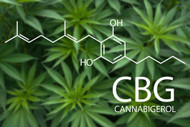
Meet CBG: Why the "Mother Cannabinoid" is the Ultimate Tool for Daytime Focus
Posted by MoonGrass on Aug 11th 2026
Beyond CBD and THC: The Rise of CBG
Most people who dip their toes into plant-based wellness are well-acquainted with the industry's two most famous compounds: CBD and THC. One is associated with relaxation, the other with cannabis's classic intoxicating effects. But as cannabinoid science moves forward, a lesser-known compound is drawing new attention — for a different reason.
If you're curious about a non-intoxicating cannabinoid being studied for its calming, focus-related effects — without caffeine's jitters or THC's high — meet Cannabigerol (CBG).
Often called the "mother cannabinoid," CBG is gaining traction as a daytime wellness ingredient. Here's what the research actually says, and where the evidence still falls short of the marketing.
Why Is It Called the "Mother Cannabinoid"?
The name comes from basic plant biochemistry: cannabigerolic acid (CBGA) is the precursor molecule from which the plant's other cannabinoid acids are enzymatically derived as the plant matures.
Because the plant converts most of its CBGA into other cannabinoids as it grows, mature hemp plants typically contain only trace amounts of CBG (often cited as under 1%). That scarcity is the real reason CBG stayed a niche ingredient for years — extracting a meaningful, purified amount takes either young, CBG-dominant plant material or specific extraction/purification techniques, which is why CBG products have only become widely available more recently.
What the Research Says About CBG and Focus/Anxiety
CBG's pharmacology is distinct from CBD and THC. Rather than working primarily through the classic CB1/CB2 cannabinoid receptors, CBG has notable affinity for two other targets:
- α2-adrenergic receptors, where it acts as an agonist
- 5-HT1A serotonin receptors, where it acts as an antagonist
Both receptor systems are involved in mood, arousal, and stress regulation, which is the pharmacological basis for interest in CBG as an anxiolytic. That said, most of this receptor-binding evidence comes from in vitro and animal studies — it's a plausible mechanism, not a fully confirmed one in humans.
On the human-trial side, the evidence is real but thinner than "recent clinical studies" suggests. As of now there is one published human trial: a 2024 double-blind, placebo-controlled crossover study out of Washington State University (Cuttler et al., Scientific Reports), testing a single 20mg dose of hemp-derived CBG against placebo in 34 healthy adults.
The findings were genuinely interesting:
- Anxiety ratings were significantly lower at 20, 45, and 60 minutes post-dose on one of two anxiety scales used
- Stress ratings were lower at the earliest timepoint only
- No significant impairment to motor or cognitive function, and low reported intoxication
- A modest, unexpected improvement in verbal memory scores (notable because THC typically impairs verbal memory)
- No significant improvement in overall mood
The study's own authors were careful to frame this as a first step: a single acute dose, a small sample of already-experienced cannabis users, tested remotely — not evidence that daily CBG use sustains focus or "supercharges productivity" over time. That kind of chronic-use, workplace-performance claim hasn't been tested yet.
A Few Things Worth Knowing Before Trying CBG
- CBG products are not FDA-evaluated or approved to treat, cure, or prevent any condition. Claims of "significantly lowering anxiety" or "clinical" support should be read against the actual, limited evidence above rather than treated as an established medical fact.
- Because CBG affects α2-adrenergic and 5-HT1A receptors, several pharmacology reviews flag possible interactions with blood pressure medications and SSRIs/other serotonin-modulating drugs. Anyone on those medications should check with a doctor before using CBG.
- Hemp-derived cannabinoid products (including CBG) are largely unregulated for potency and purity — third-party lab testing (a Certificate of Analysis) is worth looking for regardless of brand.
The Bottom Line
CBG has a legitimate, if early, research story: a clear biosynthetic role as cannabis's precursor molecule, a distinct (non-CB1/CB2) receptor profile with plausible relevance to stress and focus, and one promising — but small and preliminary — human trial. That's a real foundation to build a wellness narrative on. It's just not yet the settled, multi-study clinical case the "science" framing implies, and claims about daily productivity or sustained mental clarity are extrapolations beyond what's been tested.
Sources
- Cuttler, C., Stueber, A., Cooper, Z.D., & Russo, E. (2024). Acute effects of cannabigerol on anxiety, stress, and mood: a double-blind, placebo-controlled, crossover, field trial. Scientific Reports, 14(1). https://www.nature.com/articles/s41598-024-66879-0
- Washington State University Insider, "Cannabinoid CBG reduces anxiety and stress in first human clinical trial" (2024). https://news.wsu.edu/press-release/2024/07/31/cannabinoid-cbg-reduces-anxiety-and-stress-in-first-human-clinical-trial/
- Nachnani, R., Raup-Konsavage, W.M., & Vrana, K.E. (2021). The Pharmacological Case for Cannabigerol. Journal of Pharmacology and Experimental Therapeutics. https://jpet.aspetjournals.org/article/S0022-3565(24)25743-8/fulltext
- Mendiguren, A. et al. (2023). Cannabigerol modulates α2-adrenoceptor and 5-HT1A receptor-mediated effects in rat. Frontiers in Pharmacology. https://www.ncbi.nlm.nih.gov/pmc/articles/PMC10249961/
- Frontiers in Pharmacology (2025). Comprehensive mini-review: therapeutic potential of cannabigerol – focus on the cardiovascular system. https://www.frontiersin.org/journals/pharmacology/articles/10.3389/fphar.2025.1561385/full