

Safe Travels: The Essential 2026 Guide to Flying and Shipping Hemp Products
Posted by MoonGrass on Sep 3rd 2026
Navigating the Modern Travel Landscape
This article is for general informational purposes only and is not legal advice. Hemp and cannabinoid law varies by state and is changing at the federal level in late 2026 — always verify current rules before you travel or ship.
Whether you are heading out on a cross-country flight, taking a weekend road trip, or sending a botanical gift to a friend out of state, traveling with hemp-derived cannabinoids can feel intimidating. The legal landscape is genuinely in flux right now, so it's a fair question to ask: Will this get flagged at an airport checkpoint? Am I legally allowed to mail this?
The honest answer is: generally yes for federally compliant hemp products, with real caveats — and one major deadline coming up that anyone shipping or carrying alternative cannabinoids needs to know about. Here's an updated, accurate guide to navigating planes, trains, and shipping carriers.
Flying with Cannabinoids: What TSA Actually Does
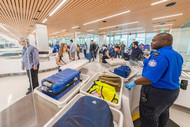
The Transportation Security Administration (TSA) is an aviation security agency, not a drug enforcement agency — its screeners are looking for threats to the aircraft, not testing your gummies. In practice, TSA does not proactively screen for THC content, and hemp-derived products at or under the federal 0.3% Delta-9 THC threshold (measured by dry weight) are treated very differently from marijuana.
That said, two things are worth being clear-eyed about:
- Screeners can't tell products apart on sight. A TSA officer cannot visually or chemically distinguish compliant hemp from marijuana at the checkpoint. If a product looks ambiguous, it can be referred to local law enforcement for further review — TSA's own policy doesn't stop that from happening.
- Federal compliance doesn't override state law. A product can be perfectly legal under the 2018 Farm Bill and still be restricted or illegal in the state you're flying into. This matters more for cross-country trips than for a domestic flight that starts and ends in hemp-friendly states.
With that context, here are the practical rules that keep things smooth:
- Keep original packaging. Products in their original, clearly labeled retail packaging are far less likely to raise questions than loose material in unlabeled containers.
- Follow the liquid rule. Topicals, lotions, or liquid tinctures in carry-on bags must follow the standard 3.4-ounce (100 ml) limit and fit in a single quart-sized clear bag. Larger containers belong in checked luggage, where there's no liquid volume limit.
- Pre-rolls and flower can travel in either bag — but smoking or vaporizing anything inside an airport or on an aircraft remains flatly prohibited under federal law.
Shipping Across State Lines: USPS, UPS, and FedEx
Shipping instead of packing your suitcase is a common alternative, but the three major carriers do not treat hemp the same way.
- USPS. As a federal entity, USPS permits mailing compliant hemp products under Publication 52, Section 453.37. This isn't just a matter of having a lab report on hand — mailers are expected to comply with all applicable federal, state, and local hemp laws, keep compliance records (including lab test results and applicable state licensing) on file for at least two years, and be able to produce that documentation to USPS on request. Two exceptions worth knowing: USPS prohibits mailing hemp or CBD vaping devices and cartridges entirely (under the PACT Act), and hemp products generally cannot be mailed internationally or to APO/FPO/DPO military addresses.
- UPS. UPS allows hemp shipping, but only for businesses formally enrolled in its dedicated hemp shipping program, using Adult Signature Required service.
- FedEx. FedEx's internal policy is restrictive enough that, in practice, it isn't a realistic option for individual shippers of hemp or alternative cannabinoids — treat it as a non-starter rather than just "higher risk."
One more thing that applies across all three carriers: some destination states restrict or ban specific hemp-derived cannabinoids outright, regardless of federal compliance. A federally legal package can still be non-compliant with the law where it's headed.
A Deadline You Need to Know About: November 12, 2026
This is the part most guides on this topic are missing right now, and it matters directly for products like THC-P.
In November 2025, Congress passed a law that redefines "hemp" at the federal level, closing the loophole that the 2018 Farm Bill opened for many alternative cannabinoids. Effective November 12, 2026, cannabinoids including Delta-8 THC, Delta-10 THC, THCA, HHC, THC-O, and THC-P will generally no longer qualify as legal hemp products in states where marijuana itself remains illegal — they'll be treated as controlled substances instead, regardless of how they're labeled or packaged. Congress is still debating adjustments to this law, so the exact contours could shift before the deadline, but as of now the date has not moved.
Practically, this means:
- Products relying on THC-P or similar cannabinoids for their effect may not be legal to fly with, mail, or possess in many states after this date, even if they were compliant the week before.
- Anyone traveling with or shipping these products should confirm current status close to the date of travel or shipment, not rely on rules from earlier in the year.
- Non-intoxicating CBD isolate products are expected to be less affected, but full-spectrum and broad-spectrum products with any measurable THC content should also be checked against the new total-THC standard.
Documentation Is Your Best Protection — Not a Guarantee
Whether you're at airport security or dropping off a shipment, paperwork is genuinely useful. A product without verified lab data is hard to defend if questions come up.
Before you travel or ship, pull up your brand's third-party testing database and save the specific batch's Certificate of Analysis (COA) — either on your phone or as a printed copy in your bag or shipping box. A clean, independent lab report showing cannabinoid breakdown and compliance with the 0.3% Delta-9 threshold is a real asset. It's worth being honest, though, that a COA is diligence, not a legal shield — it won't override state law, and after November 12, 2026, it won't make a now-restricted cannabinoid legal again. Treat it as one part of a compliance approach, not a guarantee of a stress-free trip.
Sources
- TSA — What Can I Bring? Marijuana and Cannabis-Infused Products
- USPS Publication 52, Hazardous, Restricted, and Perishable Mail — Section 453
- USPS — Shipping Restrictions & HAZMAT
- Congress.gov — Change to Federal Definition of Hemp and Implications for Federal Enforcement (CRS)
- Cannabis Business Times — 2026 Farm Bill and the Intoxicating Hemp Product Ban
- Marijuana Moment — House Passes Farm Bill Without Delaying THC Product Ban
Note: this article summarizes public regulatory sources as of September 2026. Cannabinoid law is changing quickly at both the state and federal level — confirm current rules with an attorney or the relevant agency before you travel, ship, or purchase.