

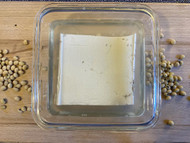
The Rise of the “Tofu Brine Battery”?
Posted by Moongrass Miles on May 29th 2026
Could a humble ingredient from tofu production help power the future?


For decades, lithium-ion batteries have powered everything from smartphones to electric vehicles. They have transformed modern life, but they also come with challenges: mining impacts, fire risks, limited lifespans, and difficult recycling requirements.
Now, researchers have unveiled an unexpected alternative that is attracting attention around the world: the so-called "tofu brine battery."
The name sounds unusual, but the science behind it could be significant. Scientists in China and Hong Kong have developed a water-based battery that uses minerals similar to those found in the brine used during tofu production. The result is a battery that is safer, more environmentally friendly, and potentially capable of lasting far longer than many batteries in use today.
What Is a Tofu Brine Battery?
Despite the nickname, these batteries do not literally run on tofu.
Instead, they use a neutral, water-based electrolyte containing magnesium and calcium salts similar to those used in tofu-making brines. Researchers describe the electrolyte as environmentally benign and safe enough to be compared to food-grade tofu brine.
Unlike traditional lithium-ion batteries, which rely on flammable chemical electrolytes, this new design uses a non-flammable water-based system. That means a much lower risk of fires and potentially simpler disposal at the end of the battery's life.
Why Are People Excited?
The biggest reason is longevity.
Researchers reported that laboratory versions of these batteries survived more than 120,000 charge cycles while maintaining performance. By comparison, many lithium-ion batteries typically last between 1,000 and 3,000 cycles before significant degradation occurs.
The research team wrote:
"Our system delivers exceptional long-term cycling stability and environmental friendliness under neutral conditions."
If those laboratory results can be replicated at commercial scale, the technology could dramatically reduce battery replacement costs for large energy storage projects.
The Sustainability Advantage


One of the most attractive features of the technology is its environmental profile.
Potential benefits include:
- Non-flammable chemistry
- Reduced reliance on scarce materials
- Less hazardous waste at end-of-life
- Longer service life, meaning fewer replacements
- Compatibility with renewable energy storage systems
Because the battery chemistry is water-based and uses abundant materials such as magnesium and calcium, researchers believe it could eventually offer a more sustainable alternative for certain applications.
For renewable energy systems, long battery life is especially important. Solar and wind power often need large storage systems to save energy for later use. A battery capable of lasting decades could reduce costs and environmental impacts over time.
Could There Be Environmental Downsides?
Every technology comes with trade-offs.
While tofu brine batteries appear promising, several questions remain:
Manufacturing Scale
The specialized organic materials used inside these batteries may prove expensive or difficult to manufacture at industrial scale. Scientists still need to demonstrate that large-scale production is practical and affordable.
Energy Density
Current versions of the technology store less energy than lithium-ion batteries. That means a battery installation may need to be physically larger to store the same amount of power.
Commercial Reality
Many battery breakthroughs perform well in laboratories but never become commercial products. Moving from a successful research paper to mass production is often the hardest step.
How Scalable Is It?
This is the question researchers and investors are now asking.
The technology appears especially well suited for:
- Utility-scale battery farms
- Solar energy storage
- Wind energy storage
- Backup power systems
- Data centers
- Rural electrification projects
Where it may struggle initially is in applications that demand maximum energy density, such as smartphones, laptops, and electric vehicles. Those markets prioritize compact size and lightweight batteries.
For that reason, experts believe the first commercial uses would likely focus on stationary energy storage rather than consumer electronics.
Research Is Moving Fast
Battery research is one of the most active fields in clean technology today.
Scientists are exploring alternatives involving sodium, iron, zinc, water-based systems, and organic materials. The tofu brine battery is part of a broader movement toward safer and more sustainable energy storage.
The recent results published in Nature Communications suggest that researchers have solved some of the durability challenges that historically limited water-based batteries. Whether they can solve the economic and manufacturing challenges remains to be seen.
Why You Should Keep Watching This Technology
The tofu brine battery may sound like something from science fiction, but it represents a real effort to rethink how batteries are made.
Imagine a battery that:
- Lasts for decades,
- Is much less likely to catch fire,
- Uses more environmentally friendly materials,
- Helps store renewable energy at massive scale.
That future is not guaranteed. The technology still has hurdles to overcome before reaching commercial markets. But the early results are impressive enough that engineers, utilities, and sustainability advocates are paying close attention.
As the world searches for cleaner ways to store energy, innovations like the tofu brine battery remind us that some of the most exciting breakthroughs can come from the most unexpected places.